





What Colors Can a PVD Machine Produce?
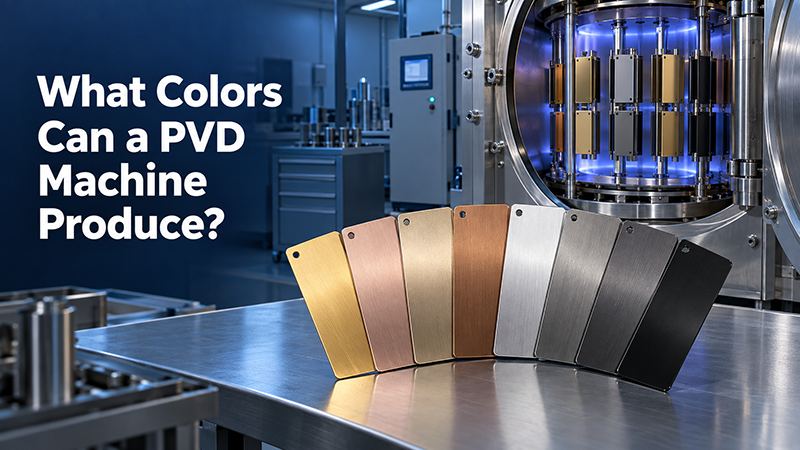
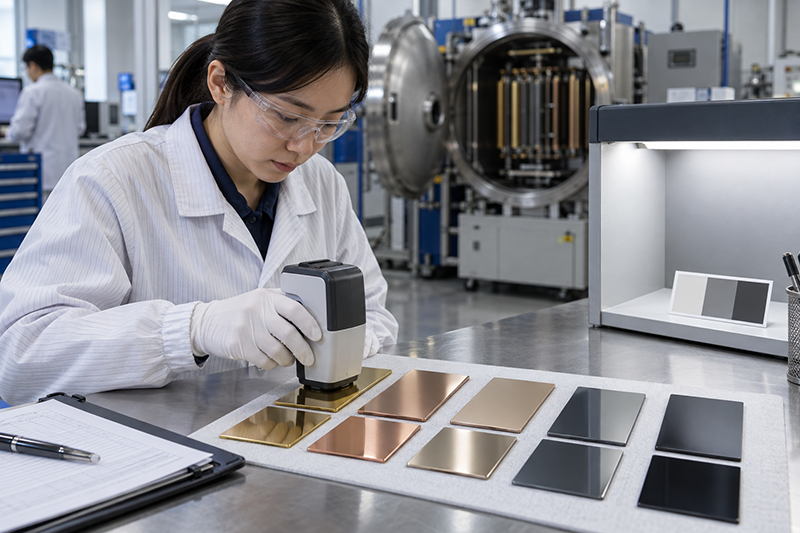
A PVD machine can produce gold, rose gold, champagne, copper, bronze, silver, titanium gray, gunmetal and black finishes. Properly configured systems can also create blue, purple and customized tones. The available palette is not determined by the machine alone. Target material, reactive gas, coating composition, layer thickness, substrate condition and process stability all affect the final appearance.
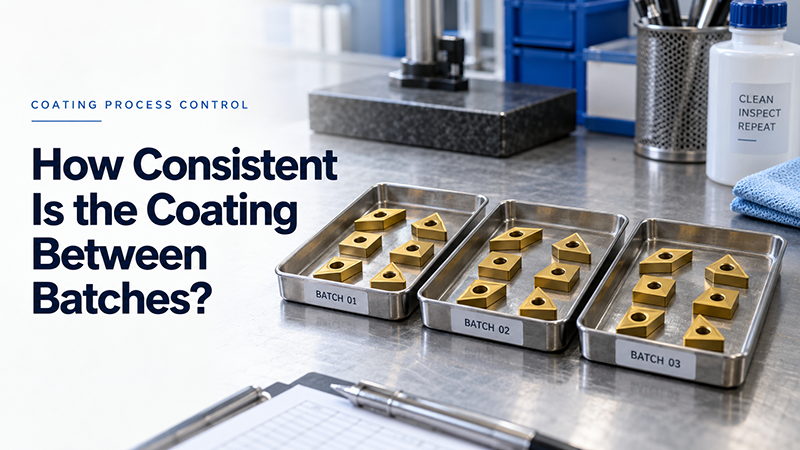
The question “What colors can a PVD machine produce?” should therefore be considered together with repeatability. Producing one attractive sample is not enough; manufacturers need the approved color to remain stable across fully loaded fixtures and later production batches.
Common PVD Coating Colors
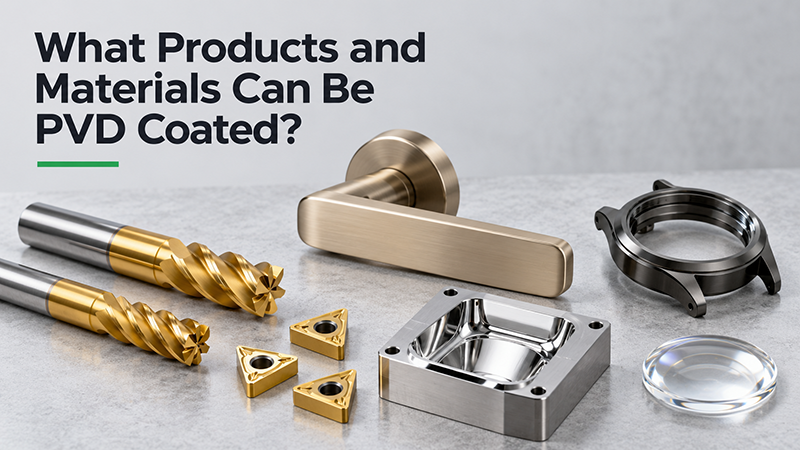
Gold, champagne and rose gold are widely used for faucets, watches, jewelry and hardware. Copper and bronze suit handles, locks and decorative panels. Silver, titanium gray, gunmetal and black appear on sanitary products, electronics and automotive trim. Blue and purple are more specialized.
Color names are not universal standards. One customer’s champagne gold may be warmer or darker than another’s. Manufacturers should approve physical samples and define measurable color limits instead of relying on a photo or verbal description.
How Does a PVD Machine Create Different Colors?
A PVD coating machine deposits a thin film inside a vacuum chamber. The film is formed from a target material and, in many processes, a reactive gas such as nitrogen, oxygen or a carbon-containing gas. Its composition controls how the surface absorbs and reflects visible light.
Gold tones are commonly produced with titanium- or zirconium-based nitrides. Carbon-containing recipes can shift the finish toward rose gold, copper, bronze or darker tones. Chromium-based processes may produce silver, gray and dark finishes. The exact chemistry depends on the substrate, required color and performance target.
The operator does not simply choose a shade from the control screen. A production recipe controls target combination, gas flow, chamber pressure, substrate bias, power, temperature, coating time and layer structure. Small parameter changes can alter brightness, undertone and measured color values.
Why the Same Color Can Look Different
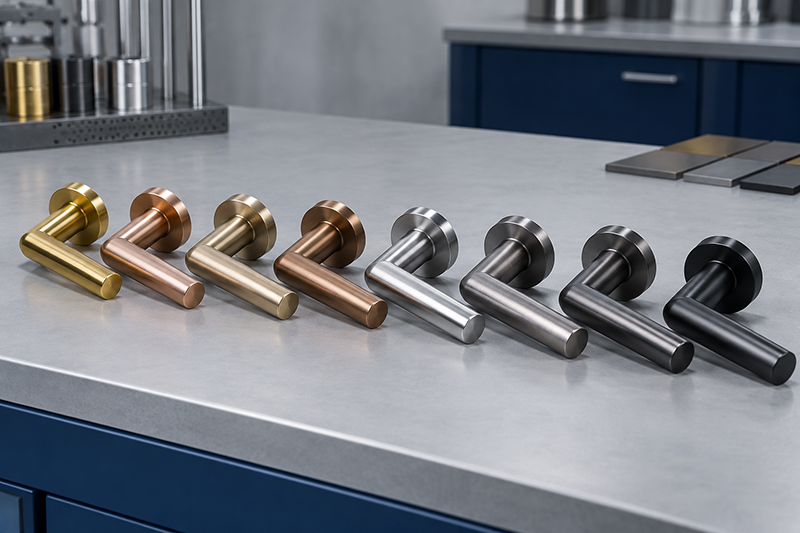
PVD follows the texture beneath it. A mirror-polished part looks bright, a brushed part appears softer, and a bead-blasted surface becomes matte. Gloss black, satin black and brushed black can therefore look different even within the same color family. PVD also does not hide scratches or poor polishing, so pretreatment must be consistent.
What Controls Color Consistency?
Stable PVD coating colors depend on repeatable cleaning, accurate reactive-gas control, stable arc or sputtering power, suitable fixture design, uniform part rotation, controlled coating thickness and regular chamber maintenance.
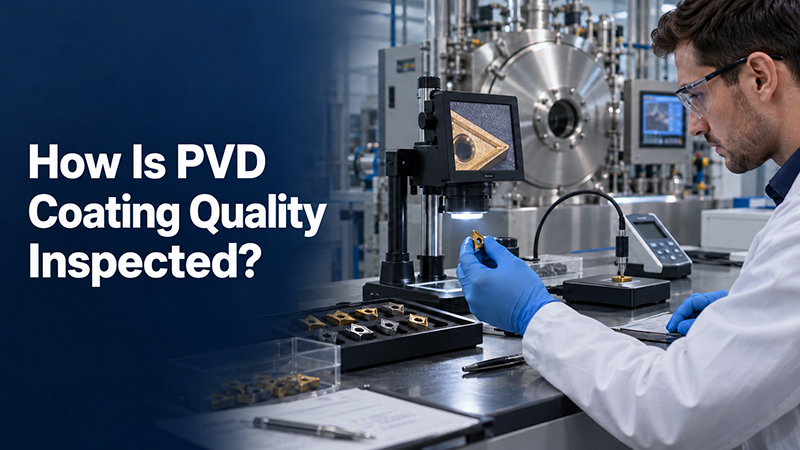
Recesses, hidden surfaces and tightly packed fixtures may receive less plasma exposure than open areas, causing shade variation. Trial coating should use the actual material, surface finish, geometry and loading arrangement planned for production. Color can then be inspected with L*a*b* values and a defined ΔE tolerance, giving the supplier and buyer an objective acceptance range.
Can One PVD Machine Produce Every Color?
Not automatically. The system needs suitable coating sources, targets, gas-control channels, power supplies, pumping capacity and process software. A machine designed mainly for hard tool coatings may not be ideal for high-volume decorative products. Blue, purple and complex optical effects may require a dedicated process configuration.
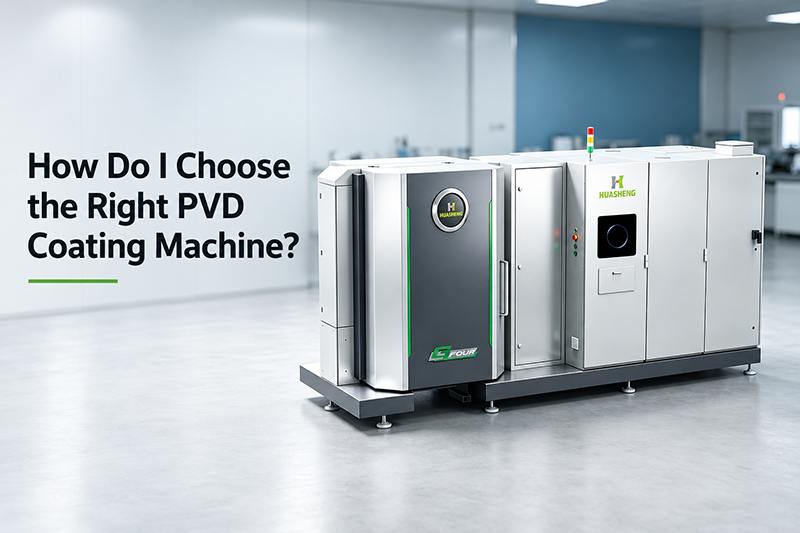
Huasheng’s decorative coating equipment includes the DECO800, DECO1000, DECO1550 and DECO1700 for different part sizes and production volumes. The configuration can be matched to the material, chamber load, color range and automation level, with stable production as the objective.
Before requesting a solution, provide the substrate, dimensions, surface finish, physical color sample, gloss level, output target and required performance tests. For bathroom or outdoor hardware, include corrosion requirements. For watches, jewelry and electronics, specify wear and appearance standards. Huasheng’s decorative PVD coating solutions can cover sample evaluation, process design, equipment configuration, installation and training.
Final Answer
So, what colors can a PVD machine produce? The practical range includes gold, rose gold, champagne, copper, bronze, silver, titanium gray, gunmetal and black, with custom colors possible on a properly configured system. Before purchasing equipment, coat real samples and verify color consistency, adhesion, wear resistance and corrosion performance under the intended production conditions.