


Should You Buy a PVD Machine or Outsource Coating?
Buying a PVD coating machine makes sense when repeat orders can keep it productive and your team can manage the process. Outsourcing remains a practical choice for uncertain demand, occasional batches, or coatings outside your technical capability. Start with production records and cost per accepted part.
Start with repeatable demand
Review the last 12 months of coating orders. Group parts by coating specification, substrate, size, and processing temperature. Total annual volume alone can be misleading: parts requiring different recipes or preparation steps may need separate batches.
Ask how many compatible loads you can run each week. Base your estimate on confirmed production, with a separate scenario for expected growth.
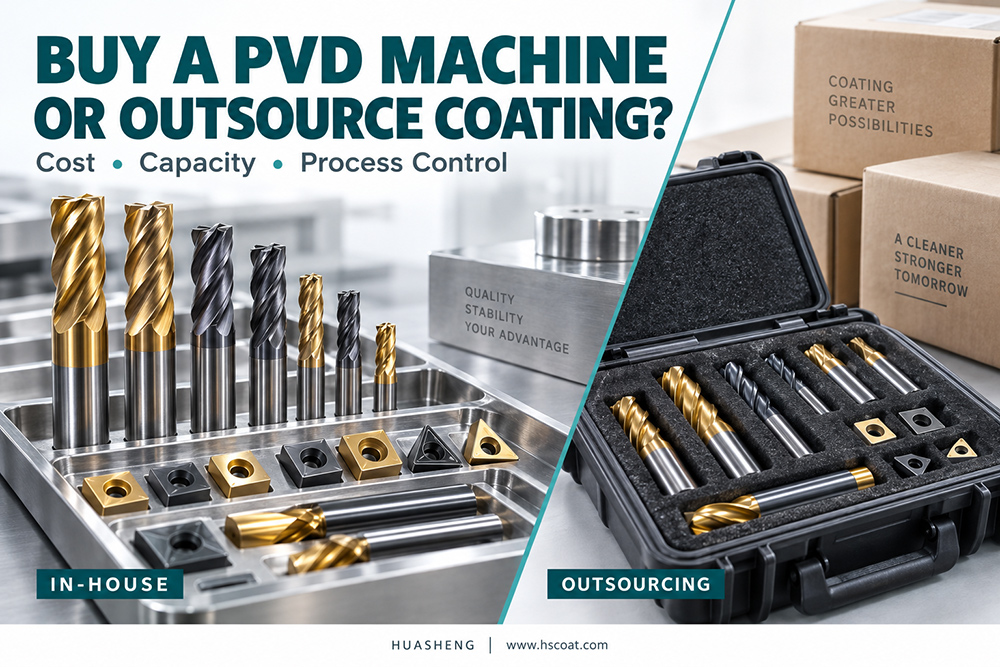
Compare the full cost per accepted part
The PVD coating machine cost is only one part of the investment. Include installation, utilities, fixtures, cleaning equipment, inspection tools, and training. Operating costs include labor, electricity, gases, targets, maintenance, and rejected or reworked parts.
For outsourced PVD coating, add packaging, freight, receiving inspection, and any minimum batch charges to the supplier’s quotation. Compare both routes at the same coating specification and acceptance standard.
A useful planning calculation is:
Annual in-house cost per accepted part = (annualized investment cost + annual operating cost) / accepted parts produced per year
Use realistic output after downtime and rejects. Run the calculation at lower utilization as well as planned utilization. Check whether the investment still works with fewer full loads.
Put a value on delivery control
Record the time between sending parts out and receiving an accepted batch. Include supplier queues, transport, inspection, and rework.
In-house PVD coating gives you more control over batch priorities and process trials. That matters when coating delays hold up finished tools or customer shipments. However, owning equipment does not guarantee immediate turnaround: cleaning, loading, pumping, coating, cooling, and maintenance still need time.
Compare complete production schedules before assuming that a machine will remove the bottleneck.
Check who will own the process
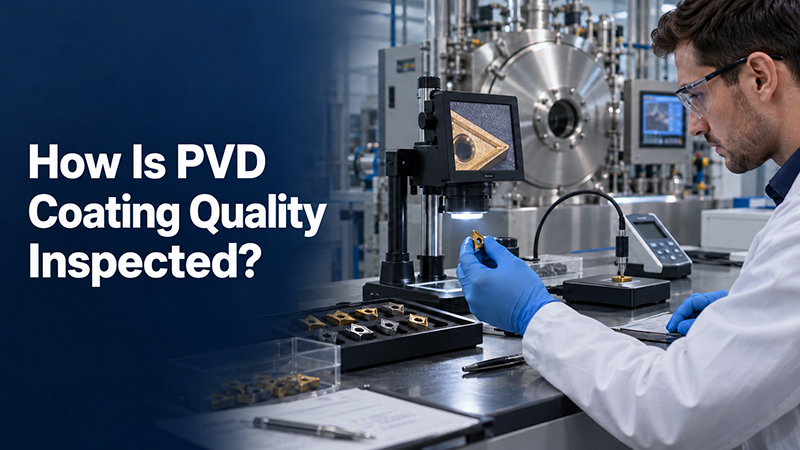
Assign responsibility for preparation, recipe control, maintenance, and inspection before ordering equipment. Decide how your team will verify coating thickness, adhesion, and application performance.
For cutting tools, include machining trials under defined conditions. For decorative parts, agree on reference colors, surface appearance, and inspection criteria.
An experienced coating service provider can remain valuable while your team builds these skills. Ask prospective equipment suppliers to explain training, process support, and acceptance testing using your own parts.
Match the machine to your application
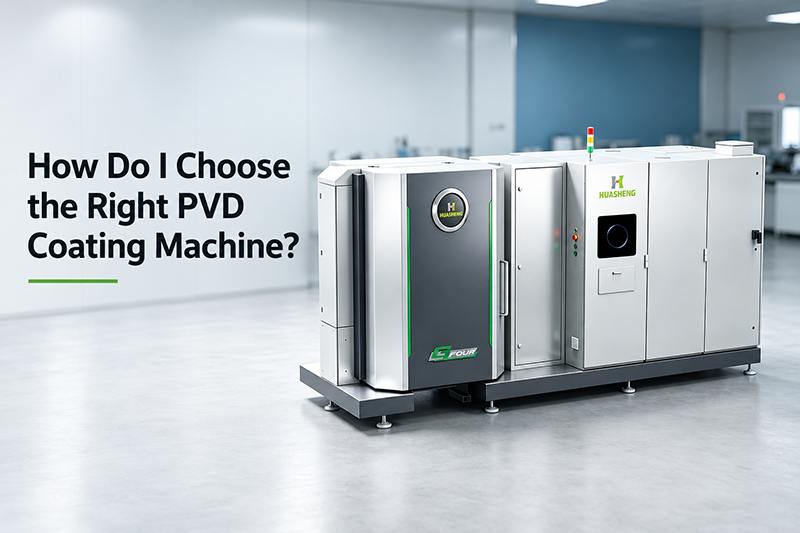
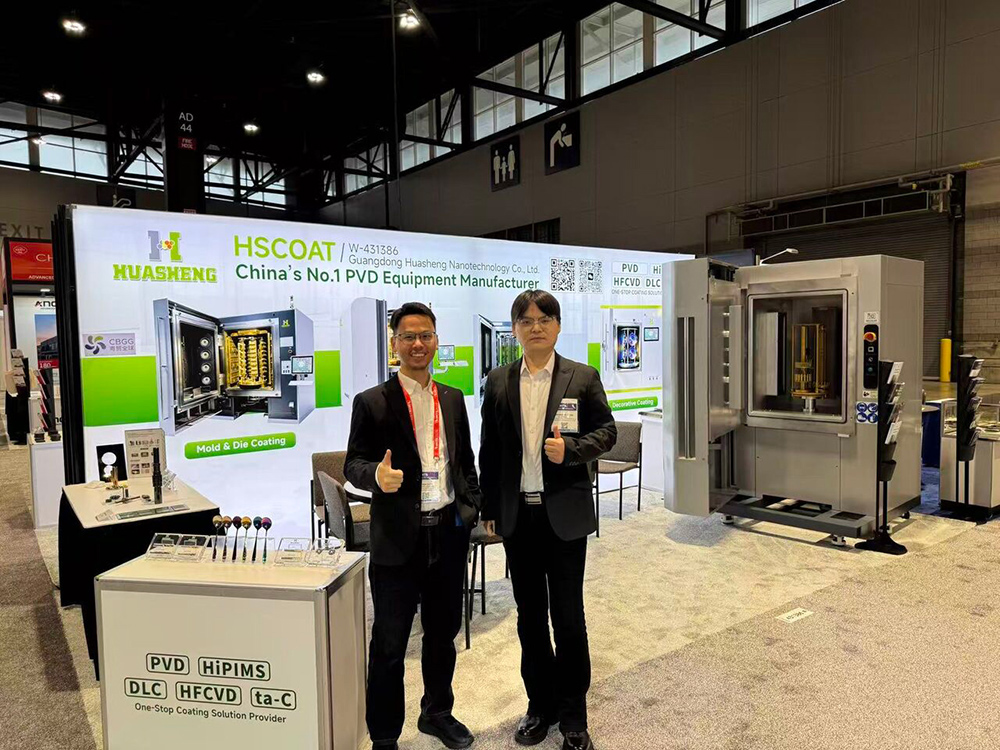
Select PVD coating equipment around your repeat work and required results. Huasheng’s range provides several starting points:
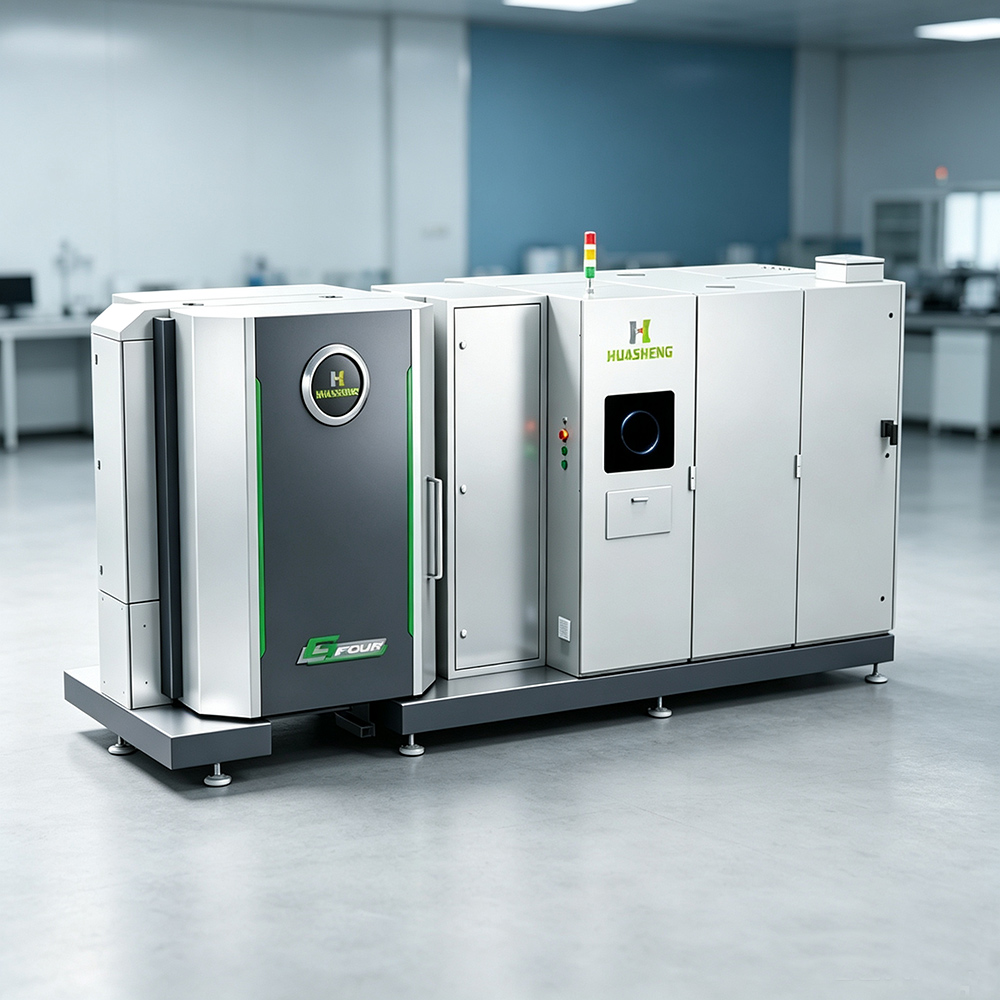
- GFOUR HiPIMS coating equipment for evaluating demanding cutting tool applications.
- MD800 Plus AIP coating equipment for batch production of general cutting tools.
- DECO series decorative coating equipment for decorative surface finishing on hardware and metal products.
These are starting points for evaluation. Confirm the coating recipe, usable loading capacity, substrate temperature limits, and batch time through application review and trials.
Ask for output estimates based on your actual part dimensions and fixtures. Insert capacity does not describe output for large molds.
Consider keeping both routes
A practical transition is to bring one stable coating family in-house and retain an external supplier for specialist jobs, overflow, and maintenance periods.
Start with parts that have predictable demand and clear acceptance criteria. Track accepted output, operating cost, delivery time, and rework before transferring additional products.
Make the decision with production data
Buy when repeatable demand, validated coating results, and available staff support the investment. Continue outsourcing when volumes remain irregular or your requirements span processes that one system cannot economically cover.
For a Huasheng equipment assessment, prepare your part drawings, substrate materials, coating specifications, monthly quantities, and current turnaround times. Use those details to compare a suitable PVD coating machine configuration with the cost and performance of your existing coating service.