



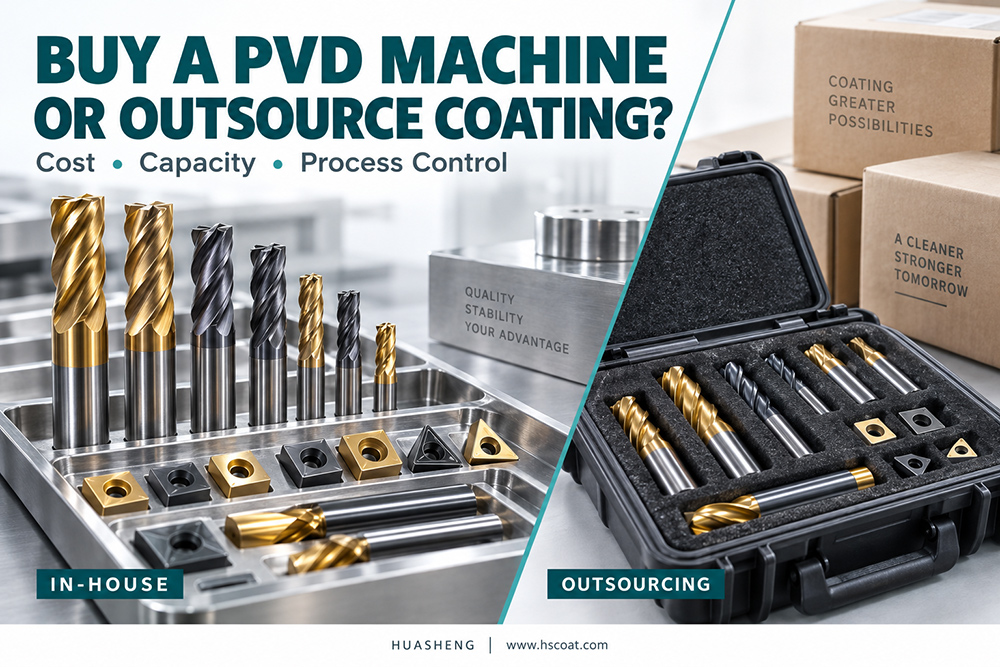
How Does PVD Coating Work?
PVD creates a thin film inside a vacuum chamber. Material is released from a solid target as atoms, ions, or plasma. The particles travel through a low-pressure environment and condense on a workpiece, building a bonded coating a few micrometers thick. For a basic definition and common applications, read what is pvd coating.
How Does the PVD Coating Process Work?
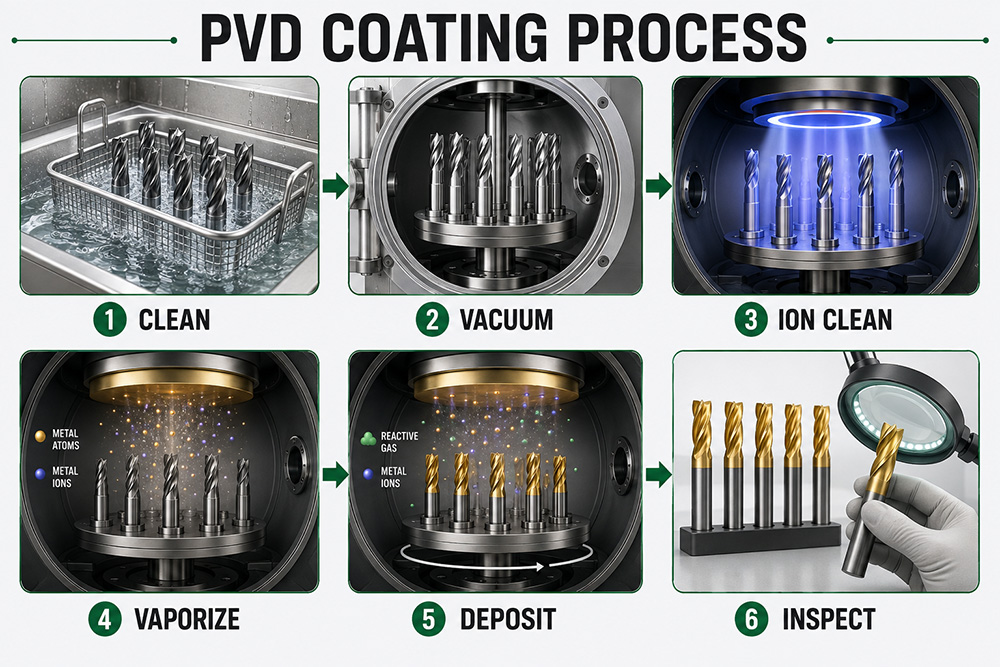
An industrial PVD coating process usually follows six stages. Its settings change with the coating chemistry, substrate, part geometry, and required performance.
1. Surface Preparation
Parts are degreased and cleaned before loading. Oil, oxide, polishing residue, and dust can weaken adhesion. PVD follows the existing surface, so scratches remain visible after coating.
2. Loading, Vacuum, and Heating
Clean parts are fixed to rotating holders. Pumps remove air and moisture from the chamber. Controlled heating releases trapped gases and brings the substrate to a stable process temperature.
3. Ion Cleaning
Argon is introduced and ionized into plasma. Energetic ions bombard the parts, removing the final traces of contamination and activating the surface for stronger adhesion.
4. Target Material Is Vaporized
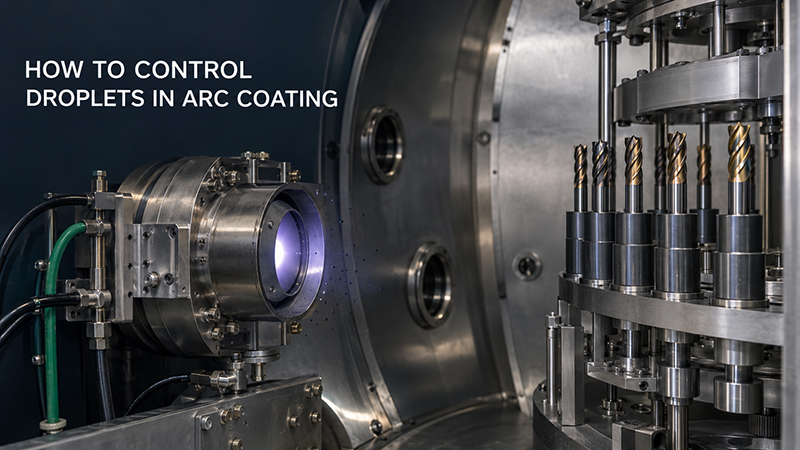
The PVD coating machine releases metal from a target. Cathodic arc ion plating creates highly ionized metal plasma at a high deposition rate. Magnetron sputtering uses gas ions to knock atoms from the target. HiPIMS applies short, high-power pulses to generate dense, highly ionized plasma.
5. The Coating Grows
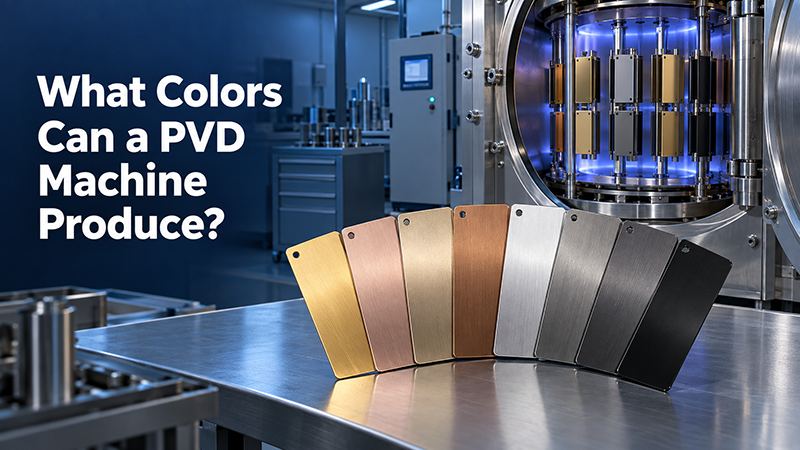
Metal particles reach the rotating parts. Nitrogen, oxygen, or carbon-containing gas can react with them to form TiN, CrN, AlTiN, and other compounds. Bias voltage attracts ions to the surface. Pressure, power, temperature, gas flow, and rotation control thickness, density, stress, color, and uniformity.
6. Cooling and Inspection
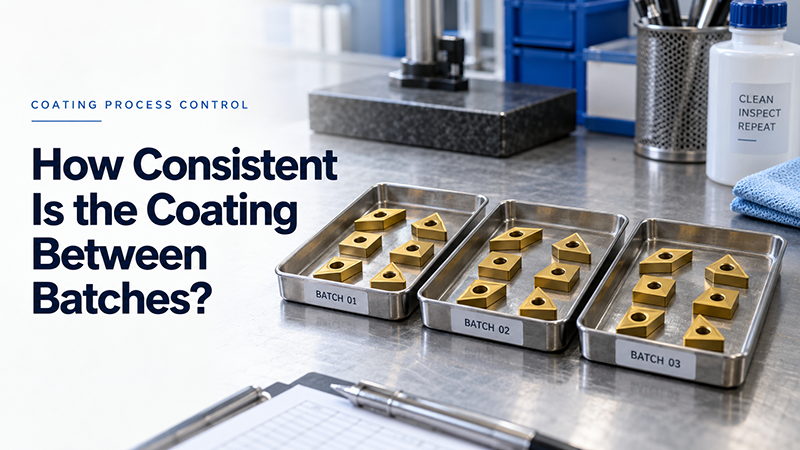
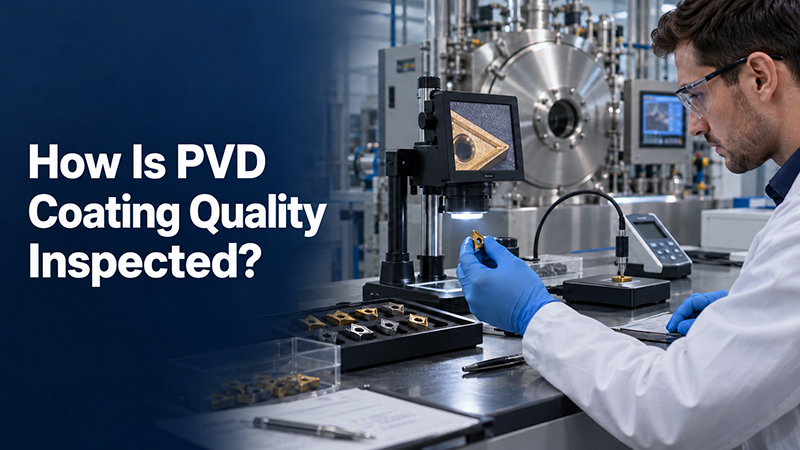
The parts cool before the chamber is vented. The batch is checked for thickness, adhesion, surface quality, color, and uniformity. Stored process data helps maintain consistent results.
Main PVD Deposition Methods
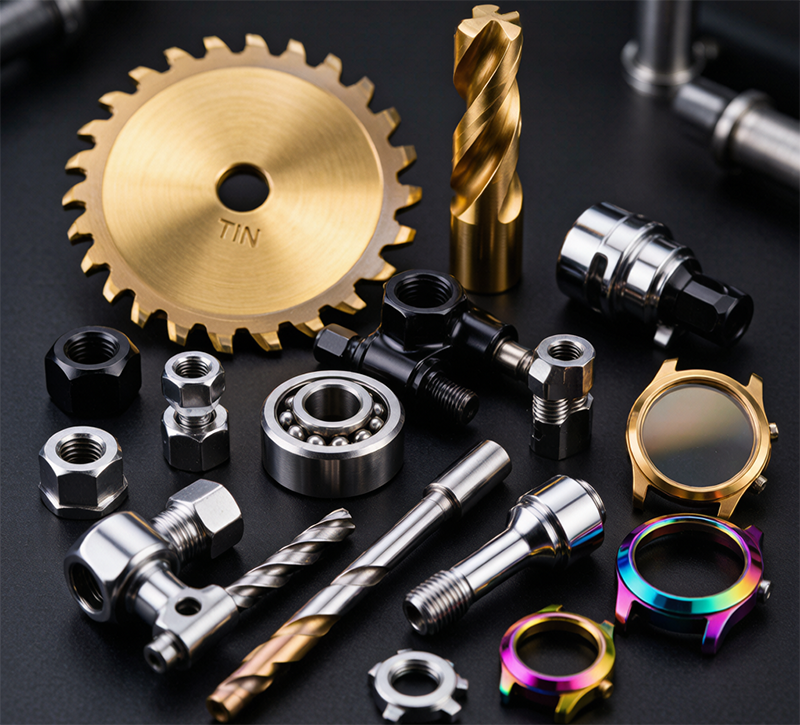
Arc ion plating is widely used for hard coatings on cutting tools and molds. Magnetron sputtering suits work that needs a smooth surface and precise film control. HiPIMS coating supports dense films, strong adhesion, and adjustable plasma energy. Hybrid PVD systems combine deposition sources to build layered structures.
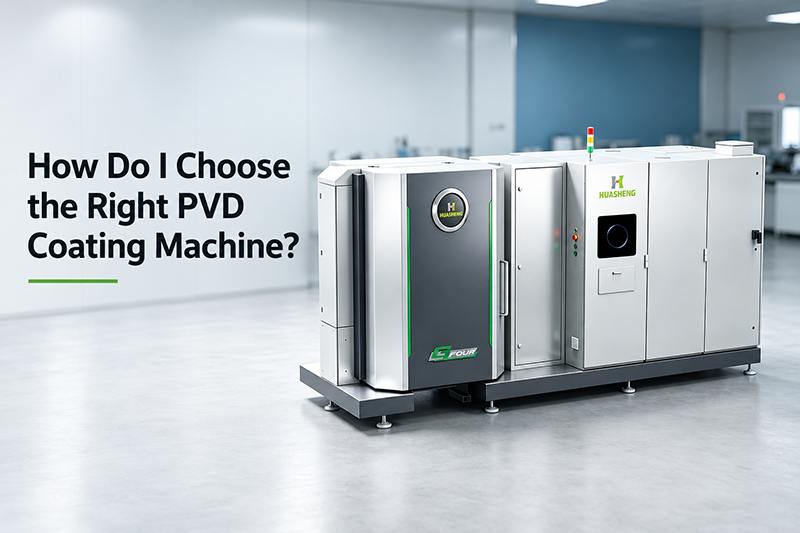
Huasheng uses these technologies across its PVD coating equipment range. The MD800 Plus arc coating system supports batch production for inserts, end mills, drills, and hobbing tools. The GFOUR PVD coating equipment uses high-power pulsed magnetron sputtering for smooth, dense coatings. HD500 and HD800 support hybrid processes, while DECO systems serve decorative and functional finishing.
What Controls PVD Coating Quality?
Vacuum stability, surface cleanliness, target condition, fixture movement, gas control, bias power, and temperature all affect the result. Poor cleaning can cause peeling. Unstable plasma can change film structure. Incorrect loading can leave shadowed areas on complex parts.
How does PVD coating work in production? It transfers material from a solid target to a prepared surface under vacuum. The film grows atom by atom, while plasma energy and process settings determine its structure, adhesion, and final performance.