


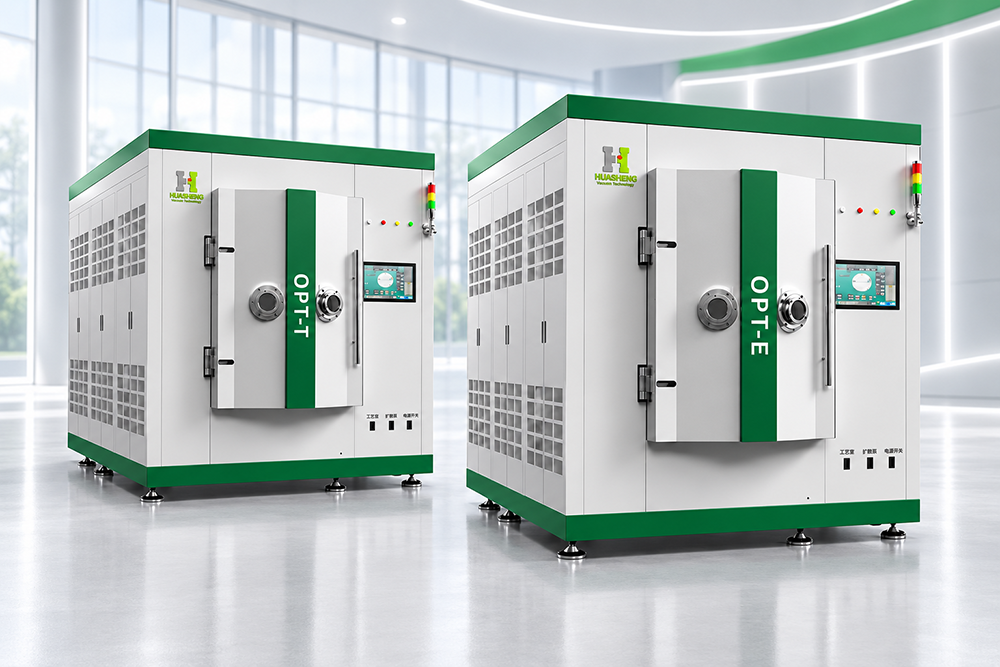
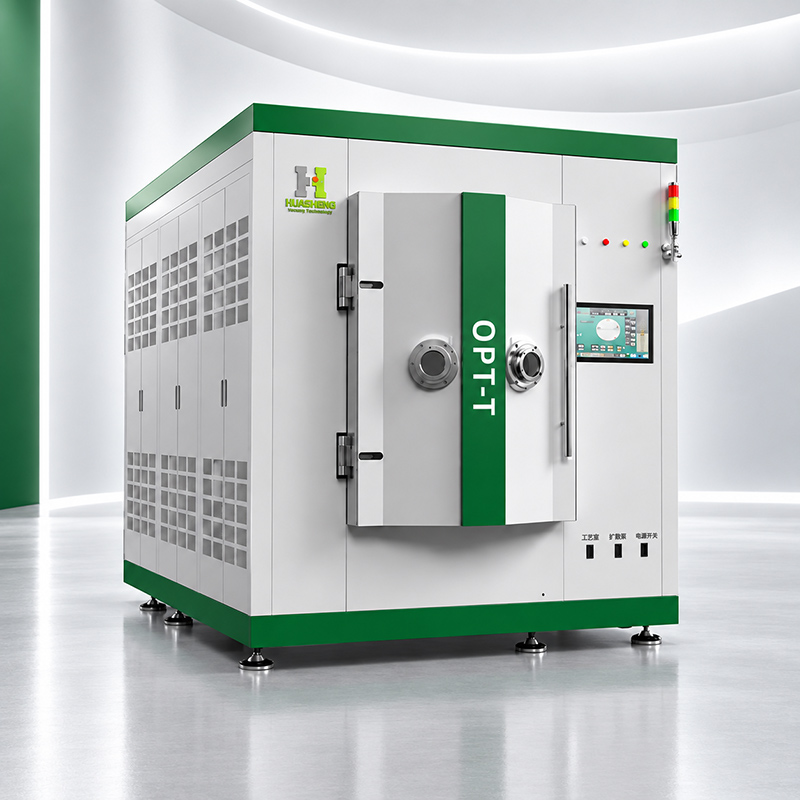
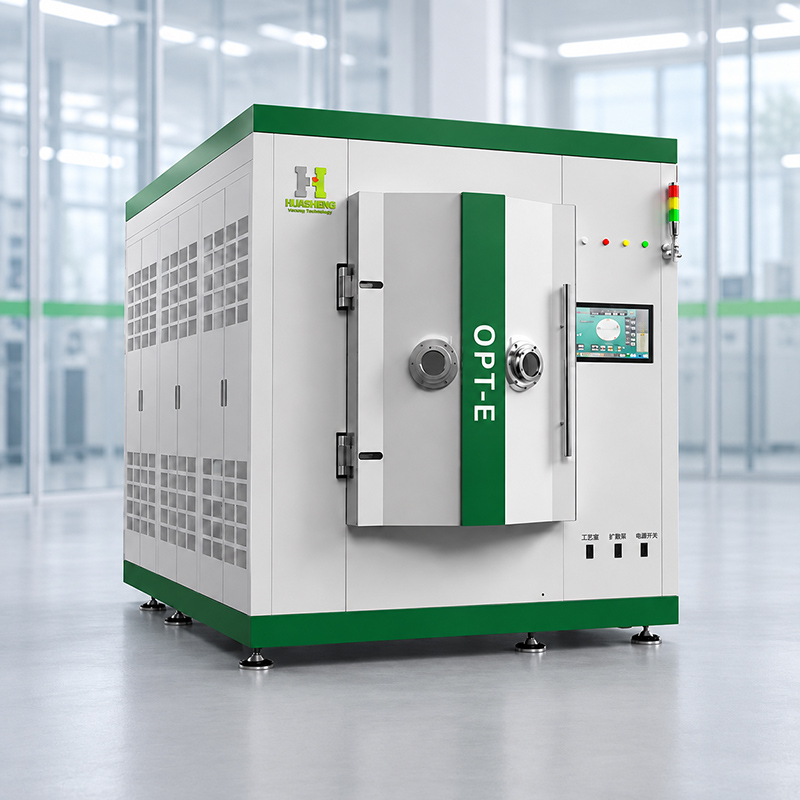
Huasheng evaporation optical coating equipment includes OPT-T thermal evaporation machines and OPT-E electron beam systems for reflective, decorative and precision optical films.
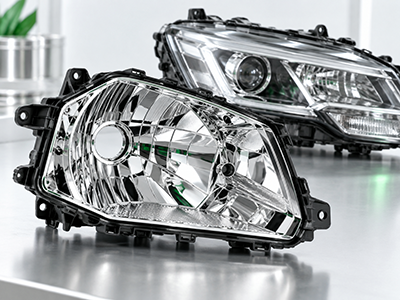
OPT-T deposits metallic finishes on plastic substrates. OPT-E supports AR, HR, filter and functional coatings on glass, quartz, silicon wafers and ceramics.
These optical coating systems provide different evaporation sources, workpiece carriers and monitoring configurations for the relevant coating process.

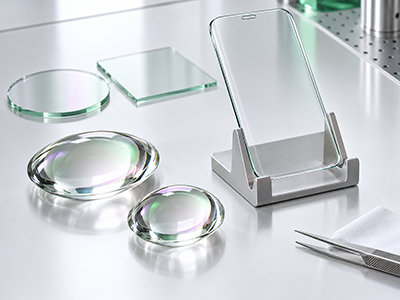
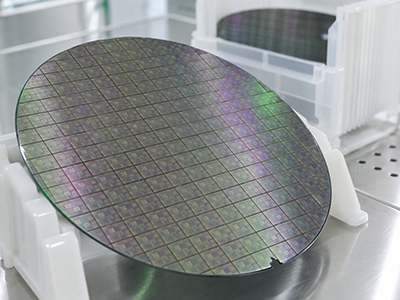
What Is Evaporation Optical Coating Equipment?
Evaporation coating equipment heats coating materials under vacuum until they vaporize or sublime. The vapor travels towards the substrate and condenses into a thin film.
OPT-T uses resistance heating for thermal evaporation. OPT-E uses an electron gun and a water-cooled copper crucible for electron beam evaporation. The two processes serve different coating materials, substrates and film requirements.

Fast Thermal Deposition
OPT-T combines rapid deposition with short thermal exposure for heat-sensitive plastic substrates.

Multilayer Optical Films
OPT-E supports continuous multilayer deposition for precision optical and functional coatings.

Crystal & Optical Monitoring
OPT-E uses crystal and optical monitoring to control film thickness and optical wavelength during deposition.

Technical Support
From process evaluation to equipment selection and after-sales service, our team supports your production project at every stage.


Why Huasheng?
-

15+ Years
Technical Expertise
With more than 15 years of technical accumulation, Huasheng focuses on the R&D, manufacturing, and application of vacuum coating equipment and coating processes. -

120+
Intellectual Property Rights
Huasheng continues to strengthen independent R&D capabilities, with 120+ intellectual property rights supporting coating equipment innovation and process development. -

30,000+ m²
Manufacturing Center
A large-scale production and manufacturing center supports equipment assembly, quality control, delivery capacity, and long-term customer service. -

150+ Sets
Advanced PVD Equipment
Huasheng operates as an original manufacturer with 150+ sets of advanced PVD equipment, supporting coating process validation and industrial application development.
Find answers about evaporation optical coating equipment, OPT-T and OPT-E selection, substrate materials and coating processes.
Contact us
1. What is the difference between OPT-T and OPT-E?
OPT-T uses thermal resistance evaporation, while OPT-E uses electron beam evaporation. OPT-T is intended for metallic reflective, decorative and NCVM finishes on plastics. OPT-E supports precision optical and functional thin films.
2. Is OPT-T electron beam optical coating equipment?
No. OPT-T uses resistance heating to evaporate coating materials. OPT-E is the electron beam optical coating equipment in this series. Both belong to the broader evaporation coating category.
3. Which substrate materials can these machines coat?
OPT-T lists plastics including ABS, PP, PC, TPU and PET. OPT-E lists glass, quartz, silicon wafers and ceramics. Choose the process according to the substrate and its coating requirements.
4. What finishes can OPT-T produce?
The documented finishes include chrome, silver, gold, gun black, rainbow and semi-transparent NCVM non-conductive films. Typical applications include automotive headlights, plastic consumer products and packaging shells.
5. What coatings can OPT-E produce?
OPT-E supports anti-reflection, high-reflection and filter coatings, together with functional films such as anti-fingerprint coatings and semiconductor electrode or contact layers.
6. How does OPT-E monitor multilayer deposition?
OPT-E uses crystal and optical monitoring for film-thickness and optical-wavelength control. The documentation also lists RF, hollow cathode and filament Hall ion-source options.
7. What should I provide when requesting an equipment quotation?
Provide the substrate material, workpiece dimensions, required coating, film structure and intended batch loading. Identify whether the project involves metallic decorative finishes or precision optical films so that the relevant OPT-T or OPT-E configuration can be discussed.